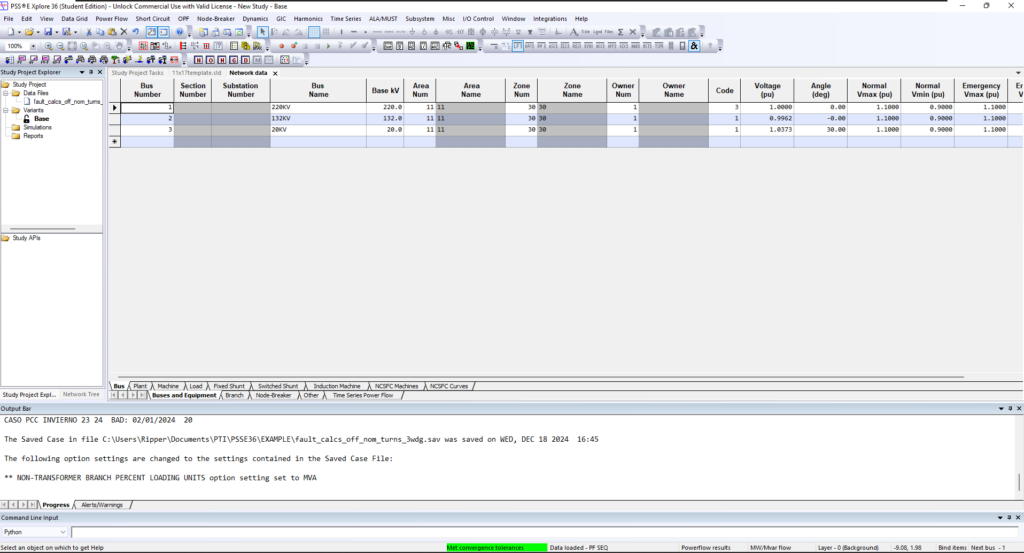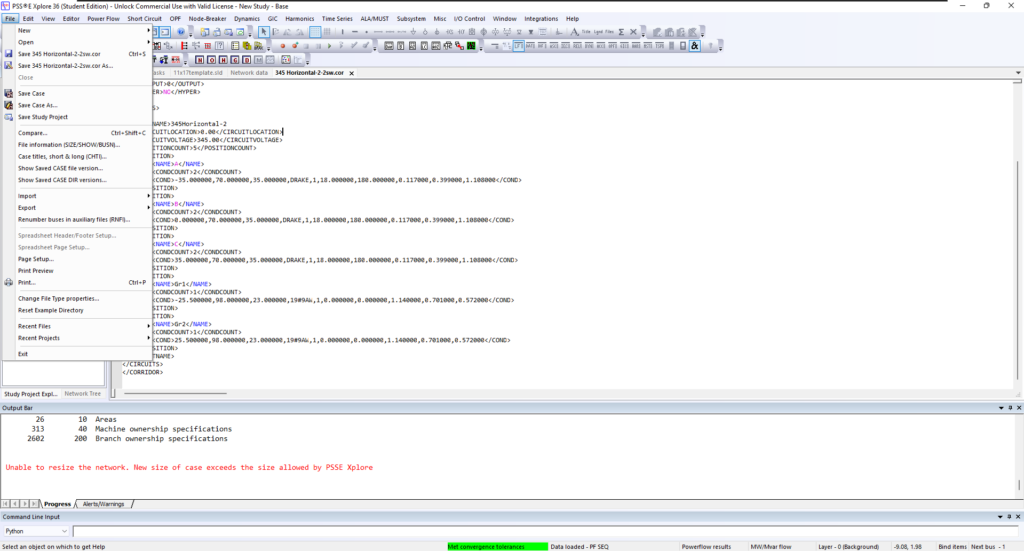

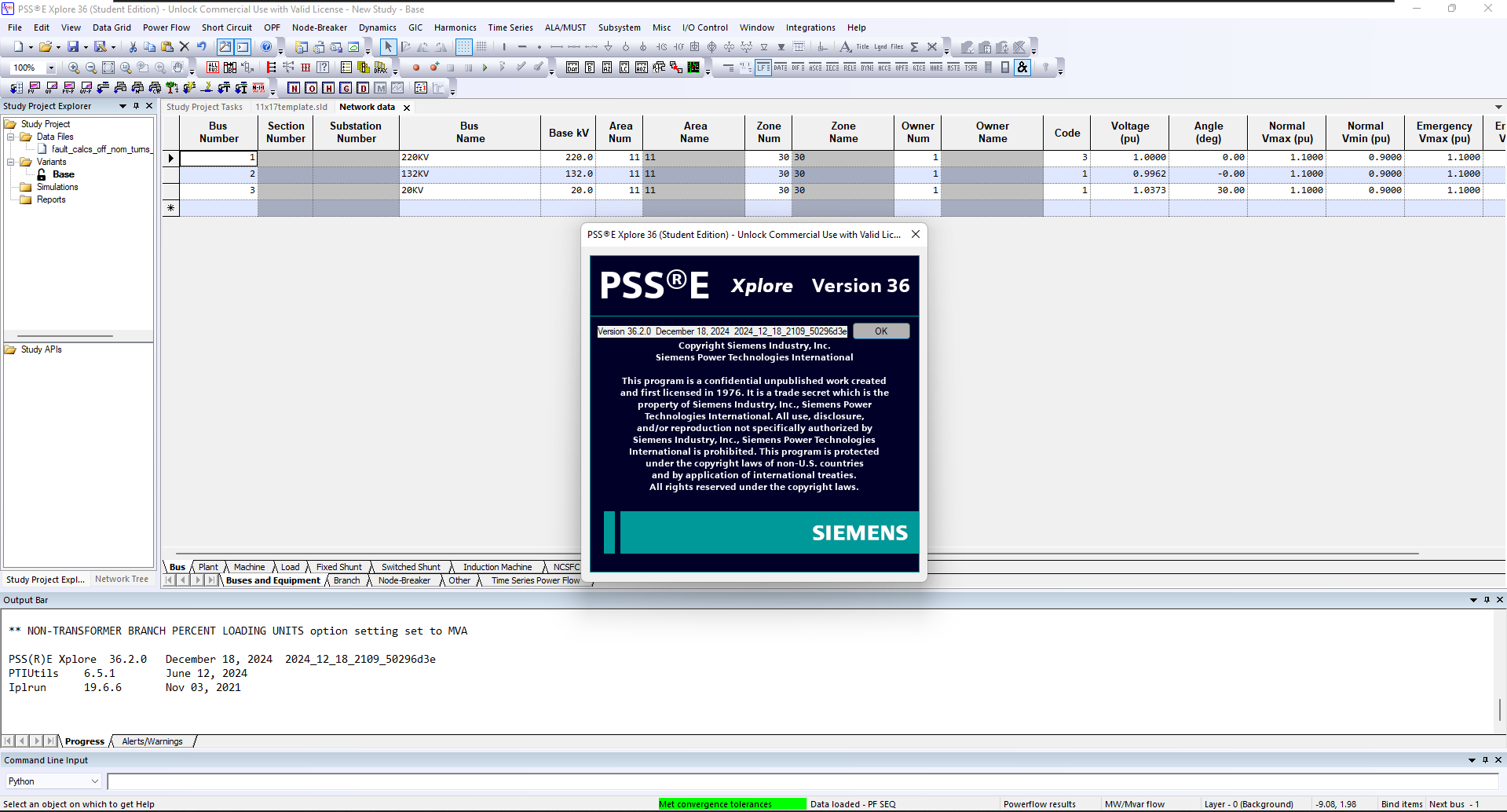
🇮🇷 معرفی نرمافزار PSSE 36.2
PSS/E (Power System Simulator for Engineering) یکی از قدرتمندترین و معتبرترین نرمافزارهای شبیهسازی، تحلیل و بهینهسازی شبکههای انتقال نیروی برق در جهان است که توسط شرکت Siemens PTI (Siemens Power Technologies International) توسعه یافته است [citation:1]. این نرمافزار به عنوان یک استاندارد صنعتی در شرکتهای برق، سازمانهای انتقال و توزیع، شرکتهای مشاور و مراکز تحقیقاتی برای برنامهریزی و مطالعات بهرهبرداری سیستمهای قدرت استفاده میشود [citation:1].
نسخه 36.2 با بهروزرسانیهای امنیتی و عملکردی متعدد، از جمله ارتقاء پیشفرض Python به نسخه ۳٫۱۲، بهبود مدلهای دینامیکی و افزوده شدن مدلهای جدید مانند REGFM81 (مدل تشکیل شبکه مبتنی بر ماشین مجازی همزمان) عرضه شده است [citation:3][citation:6].
قابلیتهای اصلی PSSE 36.2
این نرمافزار طیف گستردهای از قابلیتهای تحلیل و شبیهسازی را در اختیار مهندسان قدرت قرار میدهد که مهمترین آنها عبارتند از:
تحلیلهای هسته شبیهسازی
- تحلیل پخش بار (Power Flow): محاسبه ولتاژها، جریانها و توانها در حالت ماندگار برای سیستمهای سهفاز متقارن و نامتقارن با پشتیبانی از مدلسازی گسترده بار و تولید [citation:1]
- تحلیل اتصال کوتاه (Short Circuit): محاسبه جریانهای خطا بر اساس استانداردهای بینالمللی مختلف در سناریوهای خطای متقارن و نامتقارن [citation:1]
- شبیهسازی پایداری دینامیکی و گذرا (Dynamic & Transient Stability): تحلیل رفتار سیستم در بازههای زمانی کوتاه (چند ثانیه تا چند ده ثانیه) تحت شرایط مختلف [citation:1]
- تحلیل احتمالی (Contingency Analysis): ارزیابی تأثیر خرابی یا خروج تجهیزات بر امنیت و پایداری سیستم [citation:1]
- پخش بار بهینه (Optimal Power Flow – OPF): بهینهسازی عملکرد سیستم با کمینهسازی هزینهها یا تلفات با رعایت قیود عملیاتی [citation:1]
- تحلیل پایداری ولتاژ (Voltage Stability): ارزیابی توانایی سیستم در حفظ ولتاژ قابل قبول در شرایط بار متغیر [citation:1]
- تحلیل هارمونیکها (Harmonics Analysis): بررسی حضور و تأثیر اعوجاجهای هارمونیک در سیستم قدرت [citation:1]
- تحلیل جریانهای القایی ژئومغناطیسی (GIC): تحلیل اثرات اختلالات ژئومغناطیسی بر شبکه [citation:1]
- شبیهسازی سریهای زمانی پخش بار: شبیهسازی رفتار سیستم در بازههای طولانی با پروفایلهای بار و تولید متغیر با زمان – ضروری برای مطالعات ادغام انرژیهای تجدیدپذیر [citation:1]
ویژگیهای پیشرفته و ماژولهای افزوده
- کتابخانه گسترده مدلهای دینامیکی: شامل مجموعه وسیعی از مدلهای استاندارد اختصاصی فروشندگان برای ژنراتورها، توربینها، تحریککنندهها، تنظیمکنندههای سرعت، ادوات FACTS و سیستمهای انرژی تجدیدپذیر. امکان توسعه و یکپارچهسازی مدلهای تعریفشده توسط کاربر نیز وجود دارد [citation:1]
- Python API برای اتوماسیون: یک API جامع Python برای اتوماسیون گسترده گردشکار، اسکریپتهای تحلیل سفارشی و یکپارچهسازی با ابزارهای دیگر – یکی از ویژگیهای مهم برای کارایی و تحلیل پیشرفته [citation:1]
- ماژول ابر ترکیبی (Hybrid Cloud Module): استفاده از قدرت محاسبات ابری برای تسریع شبیهسازیها، بهویژه برای سناریوهای پیچیده و مجموعهدادههای بزرگ، با تخلیه محاسبات از ماشین محلی [citation:1]
- پخش بار بهینه با محدودیت امنیتی (SCOPF): یکپارچهسازی تحلیل احتمالی در OPF برای تضمین امنیت سیستم تحت خرابیهای احتمالی [citation:1]
- بررسی تعاملی دادهها: تجسم هشدارها و خطاهای داده بهصورت مستقیم در صفحهگستردهها و کادرهای گفتگوی ویرایش مدل برای تصحیح سریعتر خطا [citation:1]
رابط کاربری و مدیریت داده
- رابط کاربری گرافیکی (GUI): محیطی تعاملی و کاربرپسند برای مدلسازی، تحلیل و تجسم شبکه [citation:1]
- ابزار ترسیم یکپارچه: ابزارهای قدرتمند برای ایجاد و سفارشیسازی نمودارهای نتایج شبیهسازی [citation:1]
- مدیریت سناریو: مدیریت موارد مطالعه، سناریوها و انواع پروژه برای تحلیل سازمانیافته [citation:1]
- مدیریت مدل: ابزارهایی برای مدیریت فایلها و دادههای مورد نیاز برای ساخت و نگهداری مدلهای شبکه [citation:1]
- یکپارچهسازی GIS: پشتیبانی از یکپارچهسازی با سیستمهای اطلاعات جغرافیایی برای تجسم فضایی پیشرفته [citation:1]
مزایای استفاده از PSSE 36.2
- ✅ نتایج قابل اعتماد و مرجع در صنعت و ادبیات دانشگاهی
- ✅ قابلیت مدلسازی جامع برای دقت و تحلیل بالا، صرفهجویی در زمان و افزایش قابلیت اطمینان سیستم
- ✅ کاهش هزینههای زیرساختی با بهینهسازی شبکه
- ✅ بهبود گردش کار و کارایی از طریق API Python توکار
- ✅ امکان تبادل آسان داده و مدل با سایر نهادهای صنعت
- ✅ قابلیت شخصیسازی و اتوماسیون گسترده با Python API که یکی از منعطفترین APIهای صنعت است
- ✅ پشتیبانی از شبکههای تا ۲۰۰٬۰۰۰ باس
نسخه کرک شده PSSE 36.2
ما نسخه کامل و کرک شده نرمافزار PSSE 36.2 را در اختیار داریم. این نسخه:
- ✔️ کاملاً فعال و بدون نیاز به لایسنس
- ✔️ تمام قابلیتهای نسخه اصلی را دارد
- ✔️ بدون محدودیت در عملکرد
- ✔️ آفلاین و دائمی
ارتباط با ما
اگر به دریافت نسخه کرک شده PSSE 36.2 علاقهمند هستید، از طریق یکی از راههای ارتباطی زیر با ما پیام دهید:
📌 تلگرام / Telegram:
🇬🇧 English Version
Introduction to PSSE 36.2
PSS/E (Power System Simulator for Engineering) is one of the most powerful and reputable software suites for simulation, analysis, and optimization of electrical power transmission networks, developed by Siemens PTI (Siemens Power Technologies International) [citation:1]. This software is an industry standard used by transmission system operators, generation companies, consultants, and researchers for critical power system planning and operational studies [citation:1].
Version 36.2 comes with numerous security and performance updates, including an upgrade to Python 3.12 as the default version, improvements to dynamic models, and the addition of new models such as REGFM81 (a Virtual Synchronous Machine-based Grid Forming model) [citation:3][citation:6].
Main Features of PSSE 36.2
This software offers a wide range of simulation and analysis capabilities to power engineers, the most important of which include:
Core Simulation and Analysis Capabilities
- Power Flow Analysis: Determines voltages, currents, and power flows in steady-state conditions for symmetrical and asymmetrical three-phase systems with comprehensive load and generation modeling support [citation:1]
- Short Circuit Analysis: Calculates fault currents according to various international standards for balanced and unbalanced fault scenarios [citation:1]
- Dynamic and Transient Stability Simulation: Analyzes system behavior over short time scales (seconds to tens of seconds) under various disturbances [citation:1]
- Contingency Analysis: Evaluates the impact of equipment failures or outages on system security and stability [citation:1]
- Optimal Power Flow (OPF): Optimizes system operation by minimizing costs or losses while respecting operational constraints [citation:1]
- Voltage Stability Analysis: Assesses the system’s ability to maintain acceptable voltage levels under varying load conditions [citation:1]
- Harmonics Analysis: Studies the presence and impact of harmonic distortions in the power system [citation:1]
- Geomagnetically Induced Currents (GIC) Analysis: Analyzes the effects of geomagnetic disturbances on the network [citation:1]
- Time Series Power Flow: Simulates system behavior over extended periods with time-varying load and generation profiles – essential for renewable energy integration studies [citation:1]
Advanced Features and Modules
- Extensive Dynamic Model Library: Includes a vast collection of standard vendor-specific dynamic models for generators, turbines, exciters, governors, FACTS devices, and renewable energy systems. User-defined models can also be developed and integrated [citation:1]
- Python API for Automation: A comprehensive Python API enabling extensive workflow automation, custom analysis scripts, and integration with other tools – a significant feature for efficiency and advanced analysis [citation:1]
- Hybrid Cloud Module: Leverages cloud computing power to accelerate simulations for complex scenarios and large datasets by offloading computation from local machines [citation:1]
- Security Constrained Optimal Power Flow (SCOPF): Integrates contingency analysis into OPF to ensure system security under potential outages [citation:1]
- Interactive Data Checking: Visualizes data warnings and errors directly within spreadsheets and model edit dialogs for faster error correction [citation:1]
User Interface and Data Management
- Graphical User Interface (GUI): An interactive and user-friendly environment for network modeling, analysis, and visualization [citation:1]
- Integrated Plot Facility: Powerful tools for creating and customizing plots of simulation results [citation:1]
- Scenario Manager: Manages different study cases, scenarios, and project variants for organized analysis [citation:1]
- Model Management: Tools to manage various files and data required for building and maintaining network models [citation:1]
- GIS Integration: Supports integration with Geographic Information Systems for enhanced spatial visualization and analysis [citation:1]
Benefits of Using PSSE 36.2
- ✅ Trusted results serving as an industry and academic literature benchmark
- ✅ Comprehensive modeling capabilities for complex analysis and accuracy, saving time while increasing system reliability
- ✅ Cost savings and reduced infrastructure costs through network optimization
- ✅ Improved workflow and efficiency through built-in Python API
- ✅ Easy data and model exchange with other industry entities
- ✅ Extensive automation and customization potential through Python API – one of the most flexible in the industry
- ✅ Supports networks up to 200,000 buses
PSSE 36.2 Cracked Version
We have the full cracked version of PSSE 36.2 software available. This version:
- ✔️ Fully activated with no license required
- ✔️ Includes all features of the original version
- ✔️ No limitations in functionality
- ✔️ Offline and permanent activation
Contact Us
If you are interested in receiving the cracked version of PSSE 36.2, please contact us through one of the following channels:
📌 Telegram: